> For the complete documentation index, see [llms.txt](https://postman-v1.guides.gov.sg/llms.txt). Markdown versions of documentation pages are available by appending `.md` to page URLs; this page is available as [Markdown](https://postman-v1.guides.gov.sg/faq/postman-uptime.md).
# Service Status
Have questions about Postman's uptime? We aim to maintain uptime of >99.5%.
## In-house Monitoring
We have internal services to monitor Postman uptime 24/7. These services send alerts if the product is down to the engineer-on-call, so that we can respond as soon as possible.
However, if you face specific or isolated issues, please report them to us [here](https://go.gov.sg/postman-contact-us).
## Subscribe to Status Updates
If you are unable to access Postman services and would like to check if it is due to an unplanned downtime, you may visit our status page for information.
{% embed url="" %}
Relatedly, you might also wish to check [Twilio status page](https://status.twilio.com/) and [AWS status page](https://status.aws.amazon.com/) if you're experiencing an unplanned incident.
Typically, we inform users of downtime only if resolution is expected to take longer than a day, or if your campaign is directly affected.
## Postman SLAs
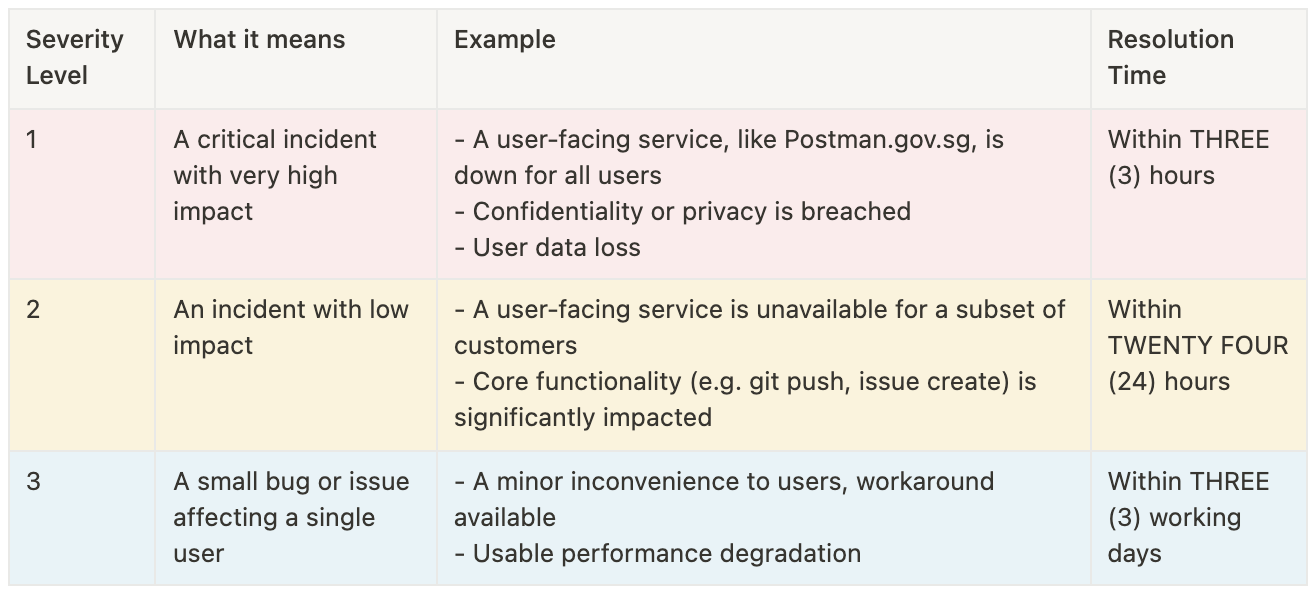
Usually, if there is product downtime, we immediately work towards getting the service back up and running as soon as we can. We generally abide by these guidelines:
##