> For the complete documentation index, see [llms.txt](https://postman-v1.guides.gov.sg/llms.txt). Markdown versions of documentation pages are available by appending `.md` to page URLs; this page is available as [Markdown](https://postman-v1.guides.gov.sg/campaign-guide-email/email/unique-url-link-per-recipient.md).
# Unique URL Link per Recipient
There are 2 ways to insert unique clickable URL links into your message template, customised by recipient.
## Method 1: Unique link couched in a word
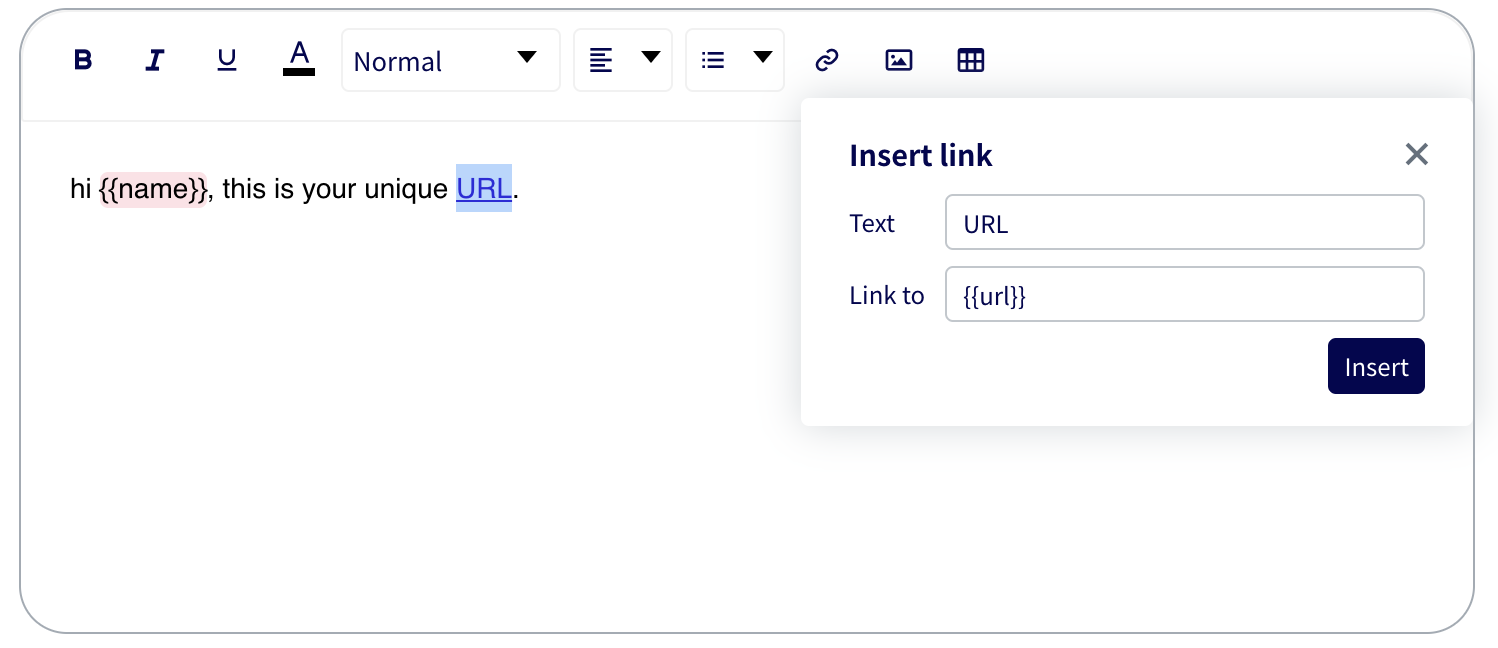
1. Highlight the word/phrase that you want hyperlinked, and click the "Insert link" icon.
2. In the "Link to" field, type in `{{url}}`.
3\. In your CSV Recipient list, include a column with the header `url`. Fields under this column must begin with `https://`
##
## Method 2: Unique link is displayed in full (also possible for SMS)
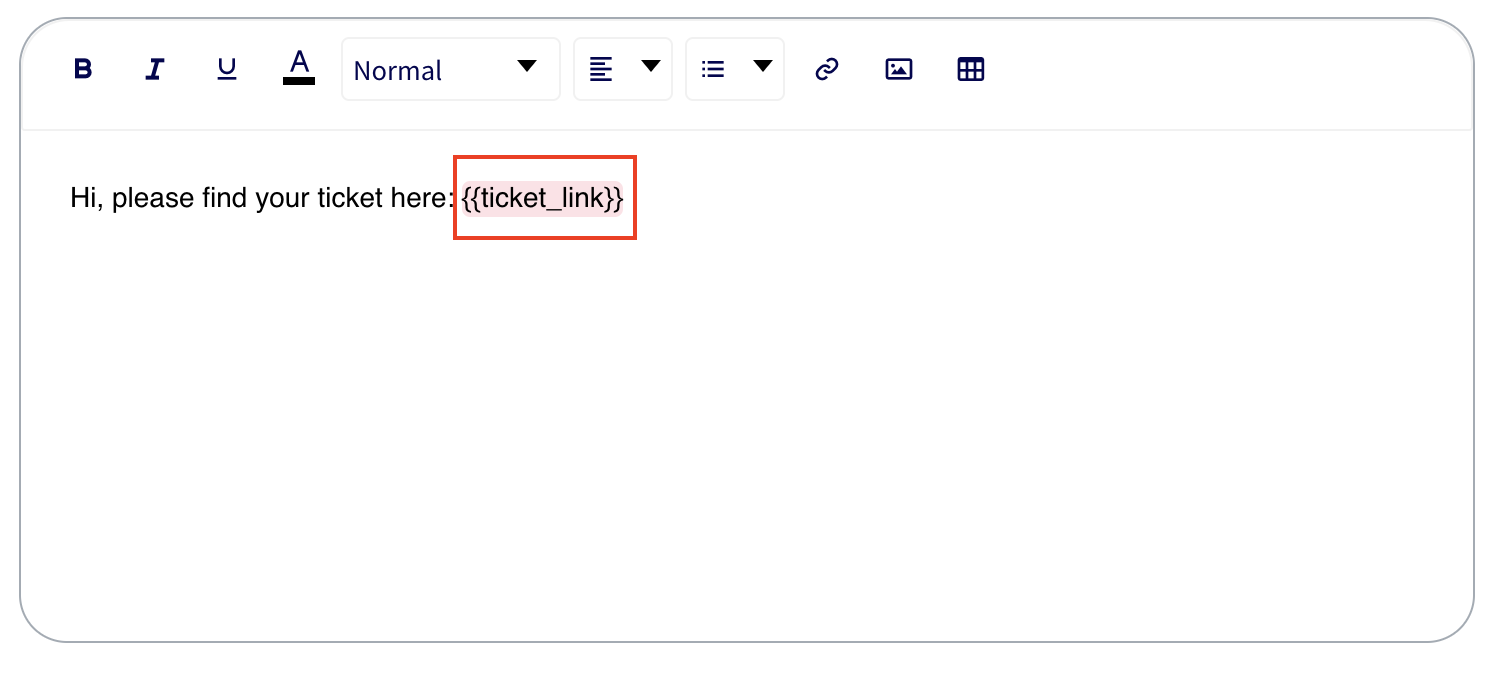
1. In the message template, write your variable field as `{{xxx_link}}`. You can fill in the first word with any word you want, as long as it is followed by `_link`. For example:
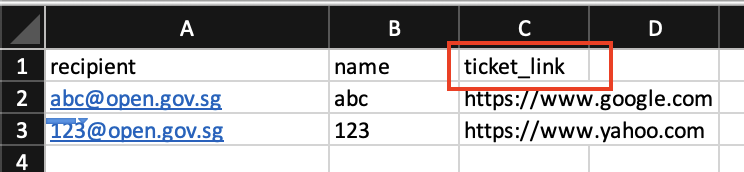
2\. In your CSV file, the header must also follow this naming convention i.e. `xxx_link`
By following these steps, the full link will appear in the message that your recipient receives.