`) `.
## Recommended for Same Images Across Multiple Emails
If you are using the same set of images across multiple emails, an easy way to use linked images in your email is to upload the image to a service like GoGovSG and reuse the same `img` tags in your emails.
For step-by-step instructions on how to upload images to GoGovSG, [see this](/campaign-guide-email/email/format-bar.md#embedding-an-image-in-email).
## Unique Image for Each Email
If you are embedding a unique image for each email, you may consider:
* Programmatically uploading your image to a file hosting service
* Currently, we do not provide such a service. However, we are looking into possible solutions, please [contact us](https://go.gov.sg/postman-contact-us) if this could be helpful to your agency.
* Using [content-ID images](/email-api-guide/programmatic-email-api/send-email-api/email-body/embedding-images/content-id-images.md)
## Sample API Call
```json
{
"subject": "Test subject",
"body": "
`.
## Recommended for Same Images Across Multiple Emails
If you are using the same set of images across multiple emails, an easy way to use linked images in your email is to upload the image to a service like GoGovSG and reuse the same `img` tags in your emails.
For step-by-step instructions on how to upload images to GoGovSG, [see this](/campaign-guide-email/email/format-bar.md#embedding-an-image-in-email).
## Unique Image for Each Email
If you are embedding a unique image for each email, you may consider:
* Programmatically uploading your image to a file hosting service
* Currently, we do not provide such a service. However, we are looking into possible solutions, please [contact us](https://go.gov.sg/postman-contact-us) if this could be helpful to your agency.
* Using [content-ID images](/email-api-guide/programmatic-email-api/send-email-api/email-body/embedding-images/content-id-images.md)
## Sample API Call
```json
{
"subject": "Test subject",
"body": "This contains an image

hello there
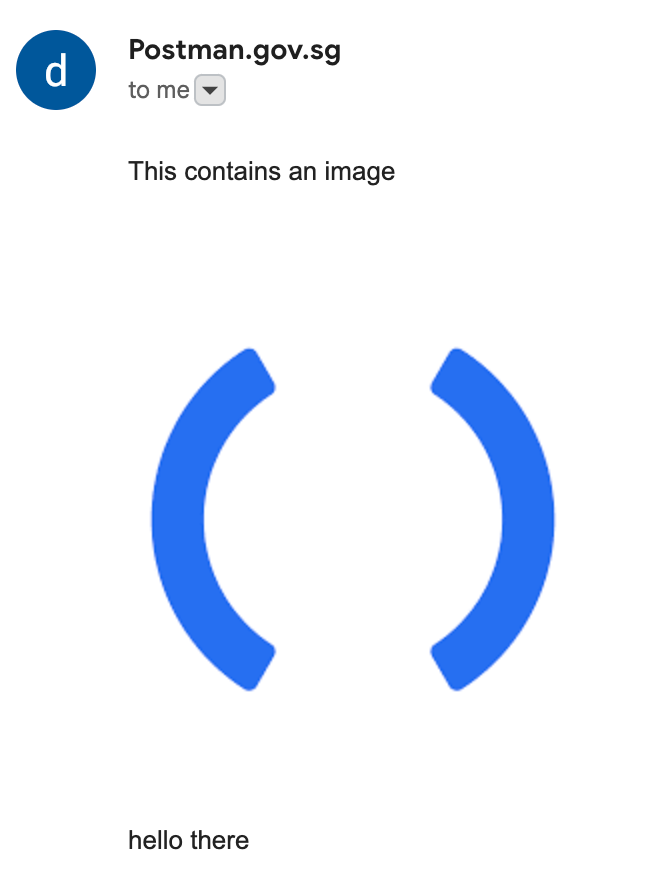
", "recipient": "recipient@agency.gov.sg" } ``` The resulting email: